
Madeira is often called the floating garden of the Atlantic, and for good reason. Its mild subtropical climate, fertile volcanic soil and high humidity let plants from almost every continent thrive here.
Bird-of-paradise flowers, magnolias, orchids, proteas, camellias, tree ferns and dozens of kinds of palm have long been part of the island’s landscape.
Madeira’s gardens hold a special place in its history, and many of them were laid out around old aristocratic estates — the quintas.
Monte Palace Tropical Garden
Perhaps the most impressive garden on Madeira. Its roughly 7 hectares hold a remarkable collection of exotic plants from all over the world.
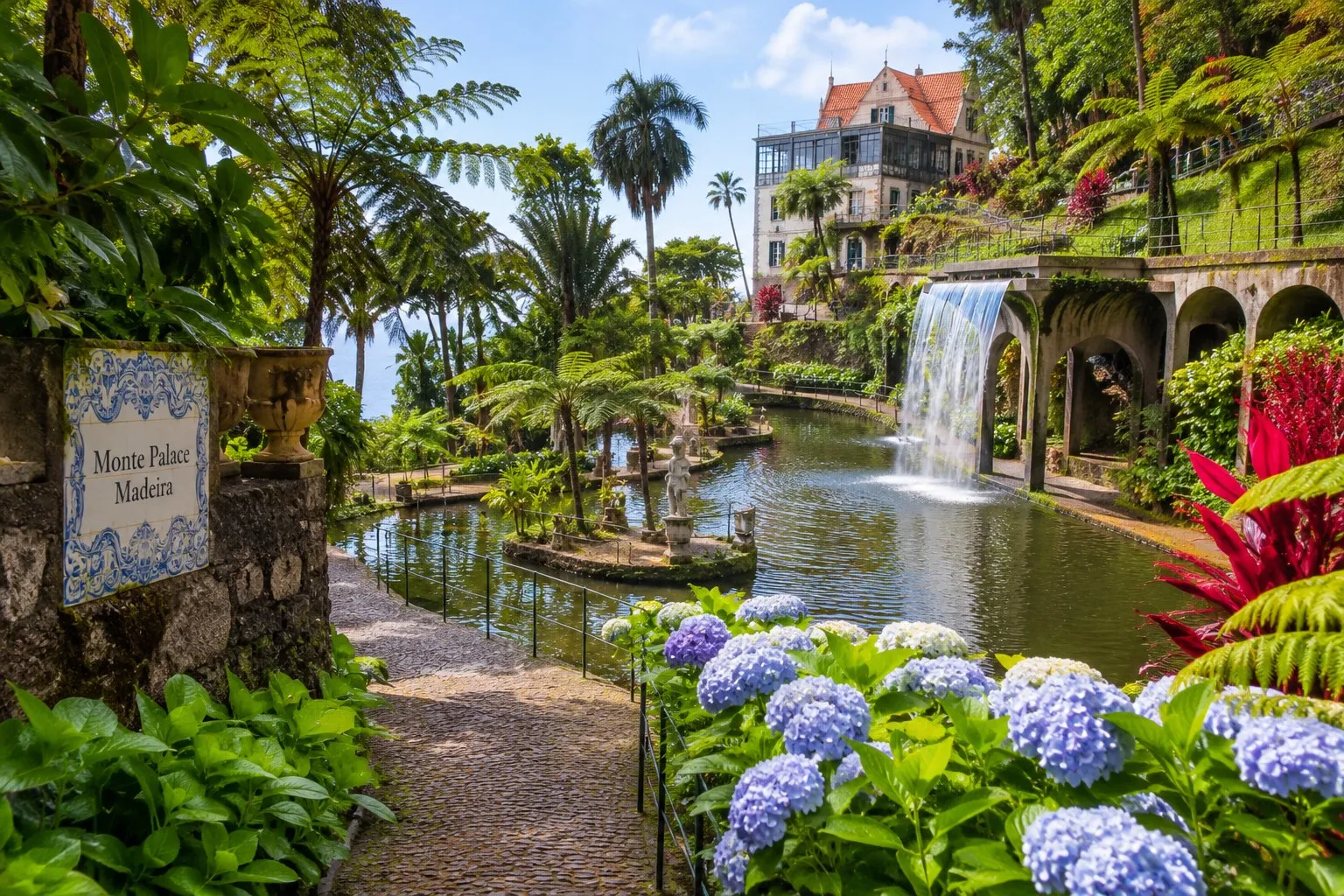
Japanese and Chinese gardens, waterfalls, koi ponds, stone sculptures, little bridges and a collection of Portuguese azulejo tiles create a very special atmosphere.
There is also a museum of African sculpture and a mineral collection. Allow at least two to three hours for a visit.
Jardim Botânico da Madeira — the Botanical Garden
Opened in 1960 on the grounds of the former Quinta do Bom Sucesso estate, the botanical garden has become one of the island’s symbols.
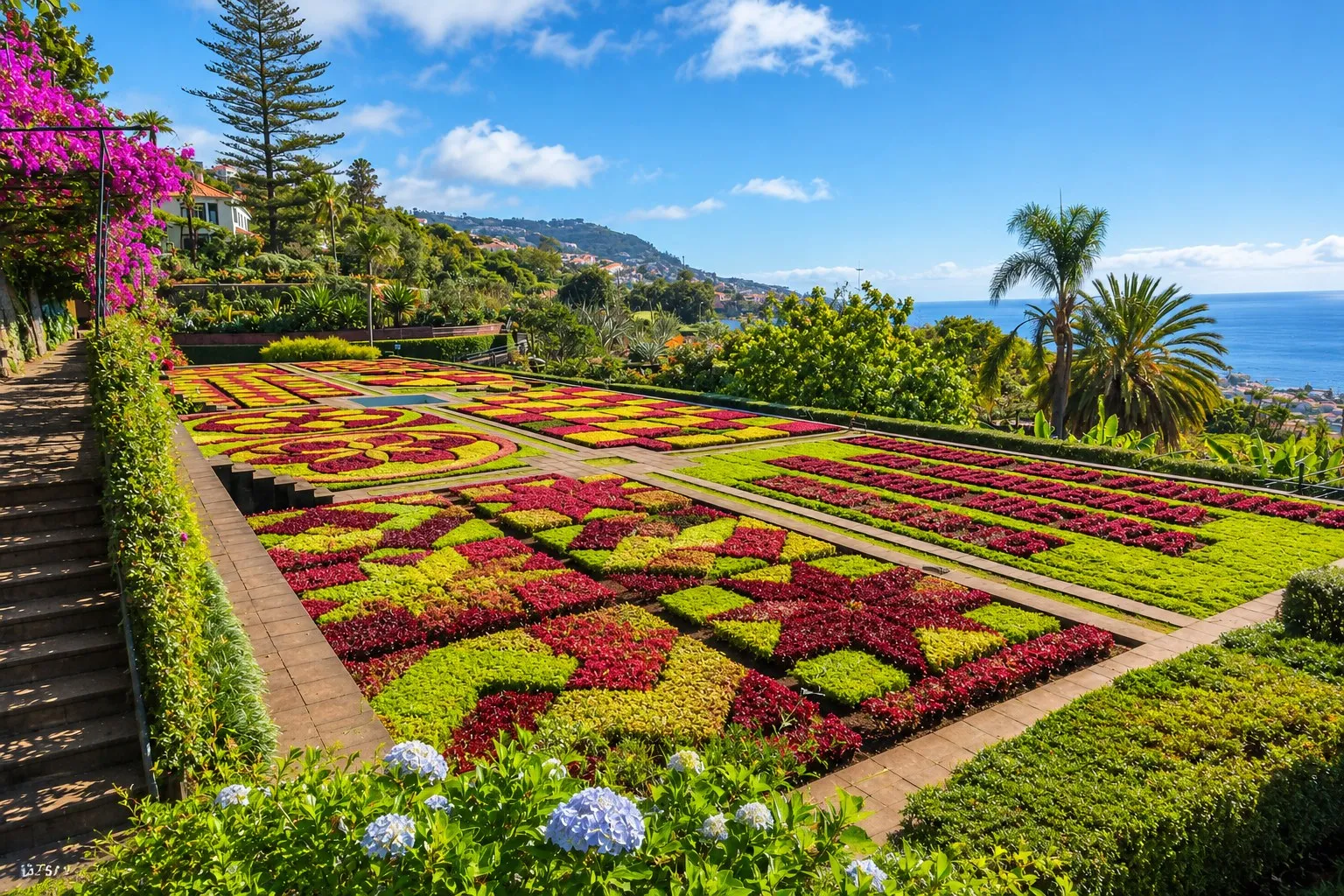
It has more than two thousand plant species, including Madeiran endemics, cacti, succulents, palms and tropical fruit trees.
It is best known for its geometric flower carpet, which appears in many guidebooks. Set on a hillside, the garden also has superb views over Funchal and the Atlantic.
Palheiro Gardens
One of the island’s most beautiful historic gardens, with a history going back to the early 19th century.
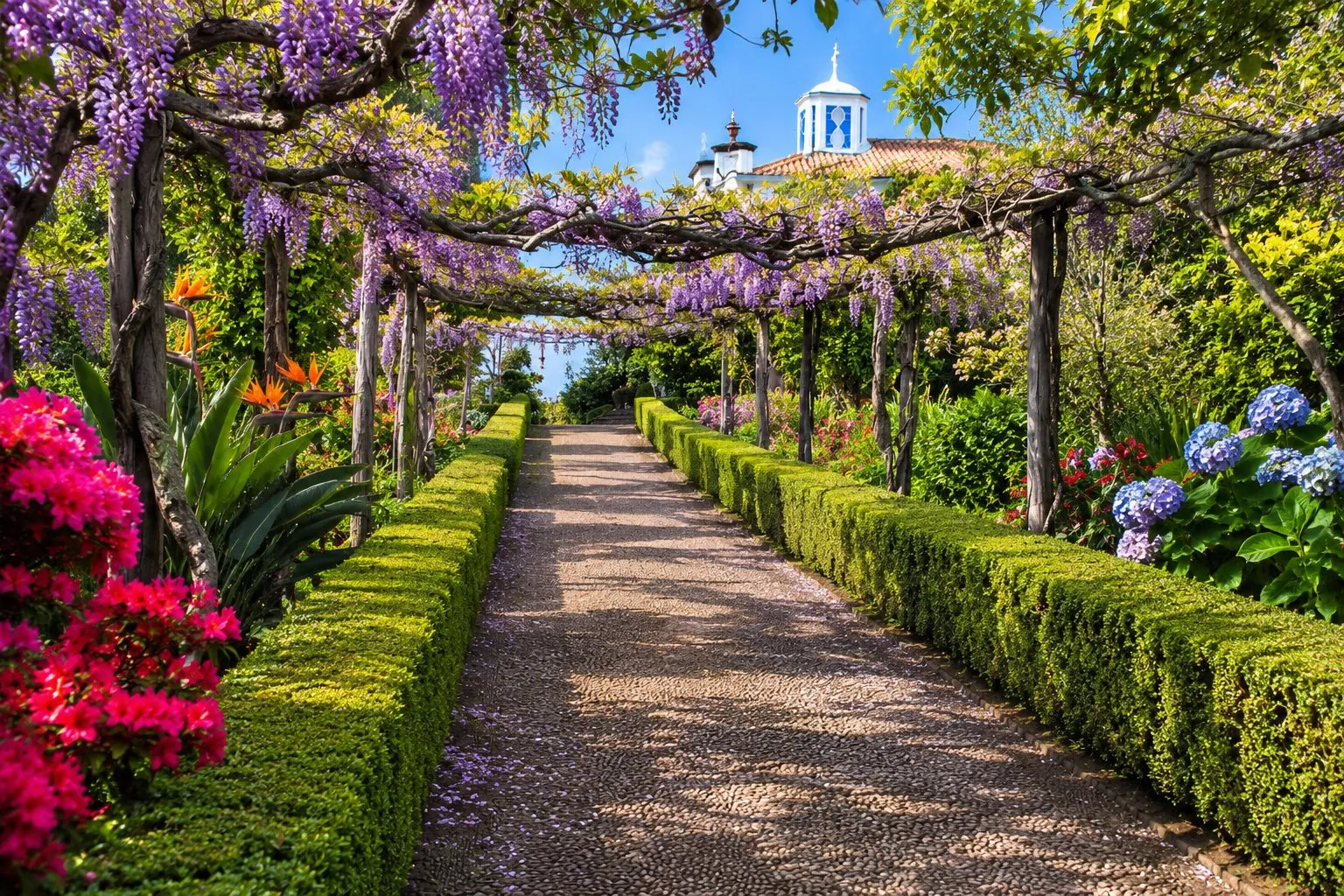
The estate first belonged to the Count of Carvalhal and later passed to the famous Blandy family, who played a major part in the history of Madeira wine.
The English landscape style, centuries-old trees, camellia collections, a rose garden and immaculate lawns make it quite unlike any other garden on Madeira.
It is especially pleasant for a walk away from the big tour groups.
Quinta da Boa Vista — the orchid garden
A historic Funchal estate known for its orchid collection. Many varieties of these remarkable plants from around the world are grown here.
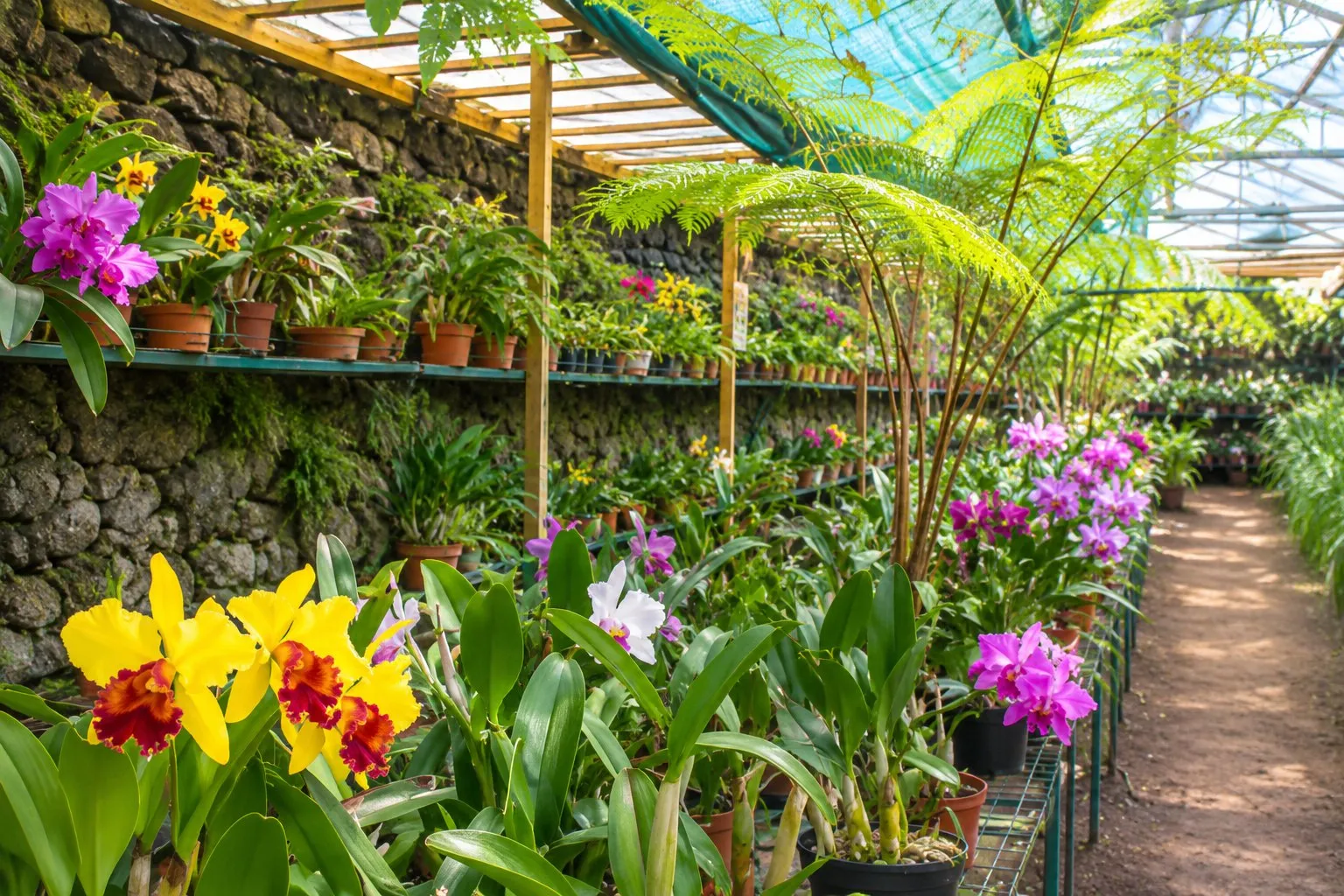
Check access and opening hours before you go.
Parque de Santa Catarina
One of Funchal’s most beautiful public parks. Wide lawns, exotic trees, flower beds and a small pond sit alongside panoramic views of the harbour and the ocean.
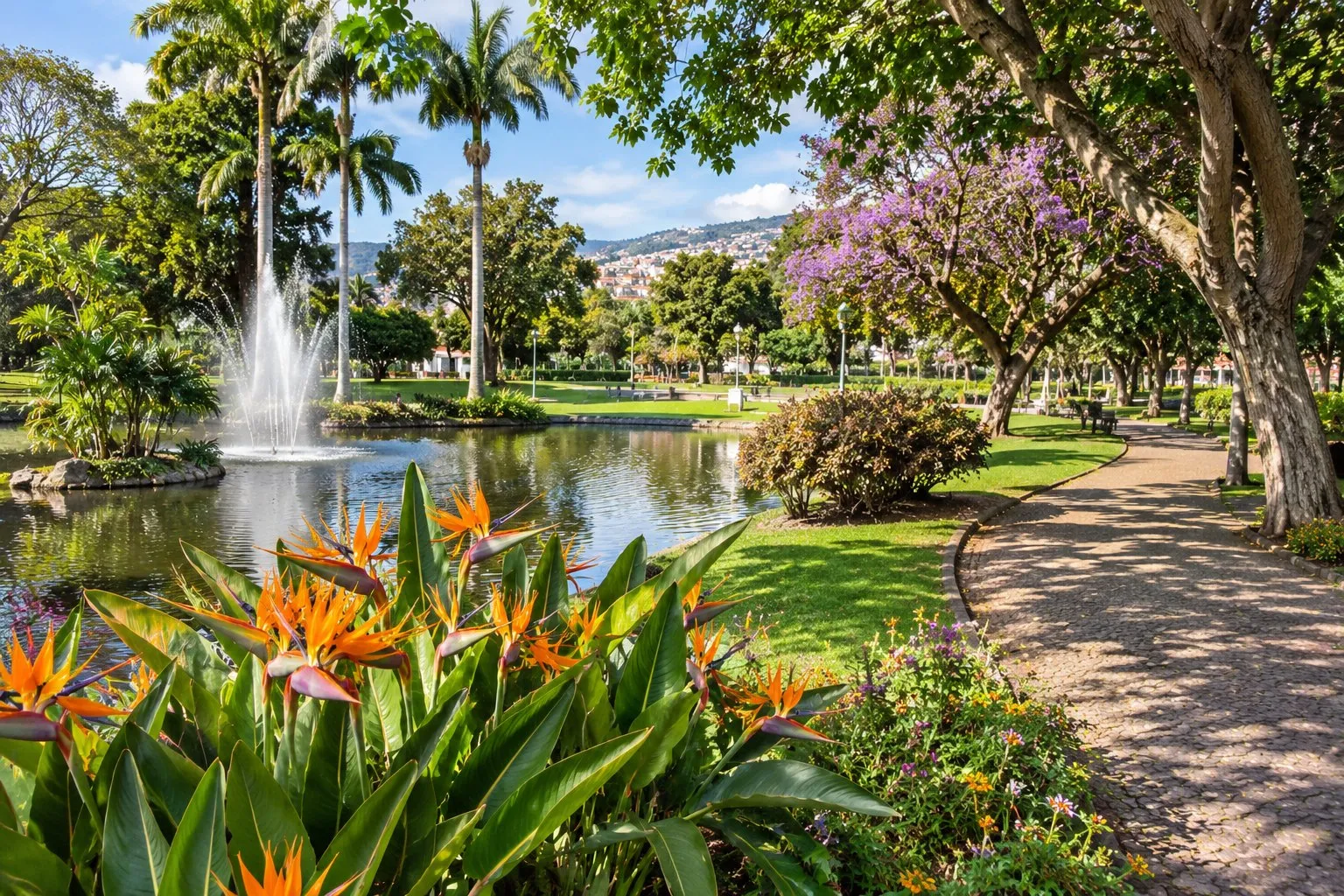
An ideal place for an unhurried walk in the city centre. Entry is free.
Jardim Municipal do Funchal — the Municipal Garden
A small but wonderfully cosy garden in the heart of Madeira’s capital, on the site of a former Franciscan convent.
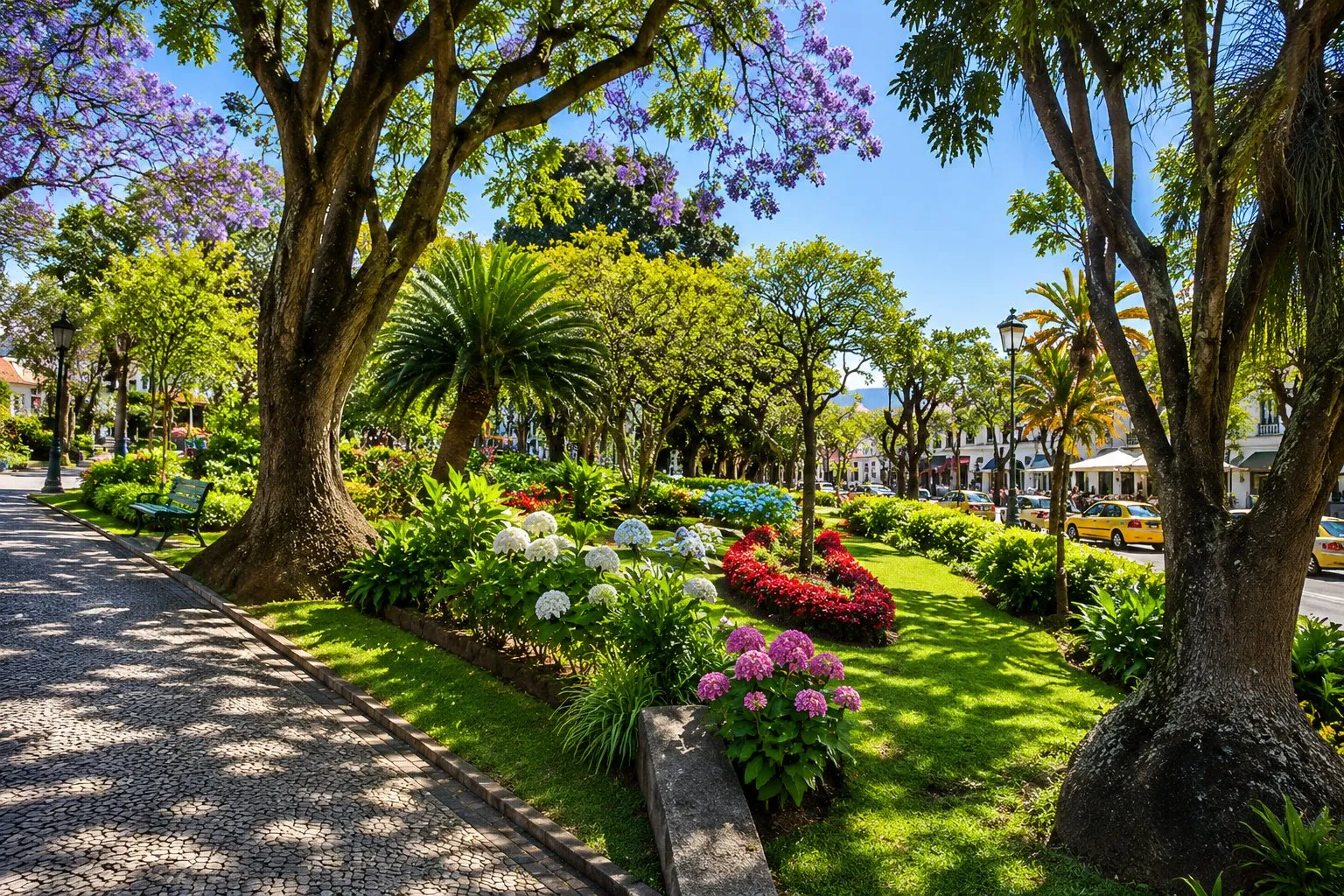
You can see plants from many parts of the world here, rest in the shade of the trees and escape the bustle of the city for a while.
Jardins da Quinta Magnólia
A historic estate with a lovely public park in the western part of Funchal.
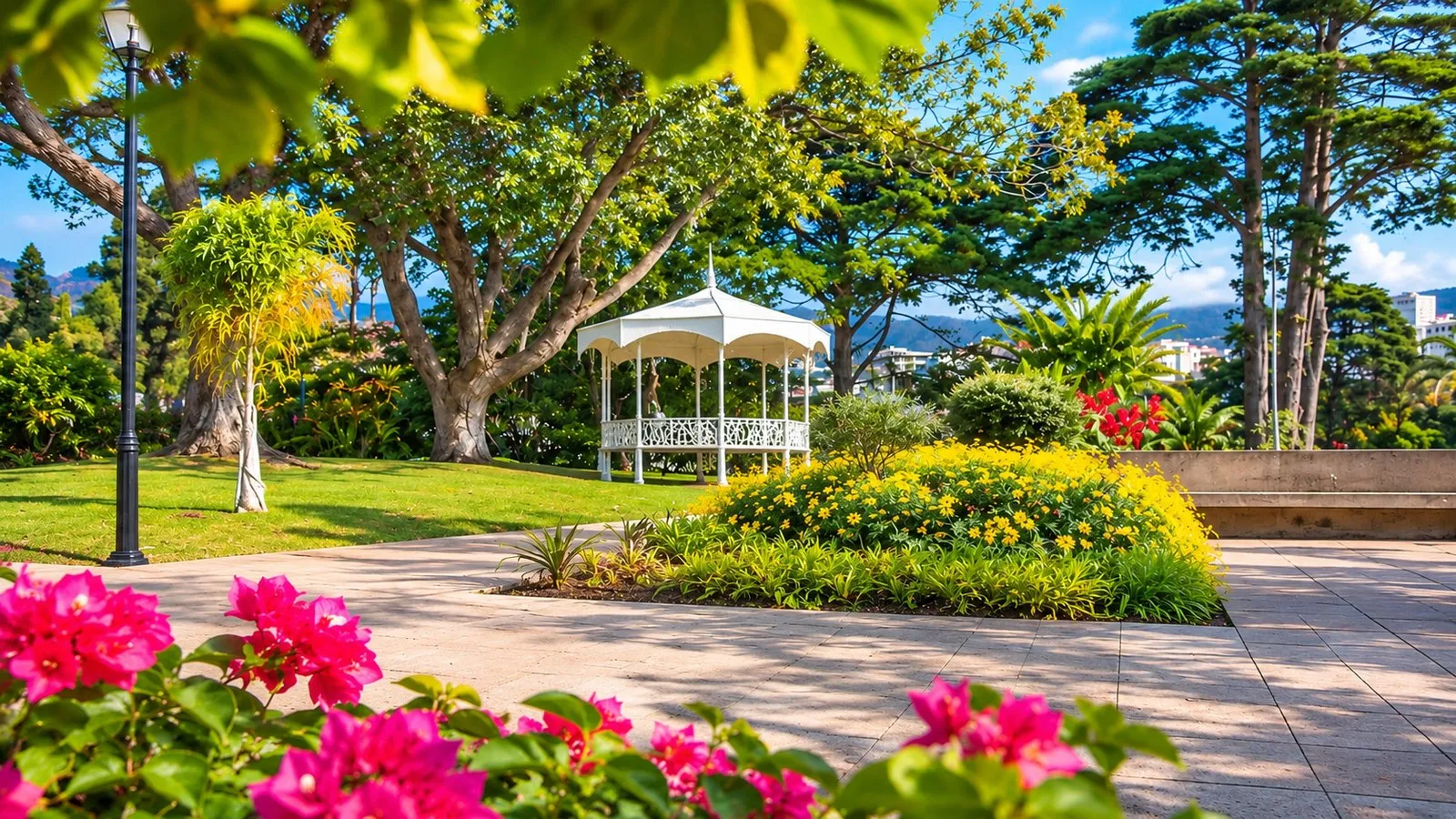
Centuries-old trees, tropical vegetation, footpaths and a calm atmosphere make it a great place to relax — and it is still little known among tourists.
When is the best time to visit Madeira’s gardens?
The island’s gardens are beautiful all year round. Spring brings the most flowers, summer has agapanthus and hydrangeas, and in autumn and winter you can enjoy camellias, bird-of-paradise flowers and other exotic blooms.
There is hardly a season on Madeira when nature stops flowering altogether.
Every garden on Madeira has its own character, history and atmosphere. Some feel like a tropical jungle, others like an English country estate, and others transport you to faraway Asia.
On my private tours we can visit both the island’s most famous gardens and lesser-known corners that usually stay off the standard tourist routes.
Madeira is not just an island with beautiful gardens. It is an island that is itself one huge botanical garden in the middle of the Atlantic.


